
In the quiet corners of a bustling high-tech industrial park, where precision manufacturing never sleeps, a compact, weather-resistant green enclosure sits almost unnoticed. While it occupies no more space than a standard parking spot, this unit is the heart of the facility’s productivity. Within its reinforced walls, a China Top Distribution Transformer For Substation Project silently steps down high-voltage electricity to usable power, ensuring that sensitive robotic lines and data servers remain operational without a flicker.
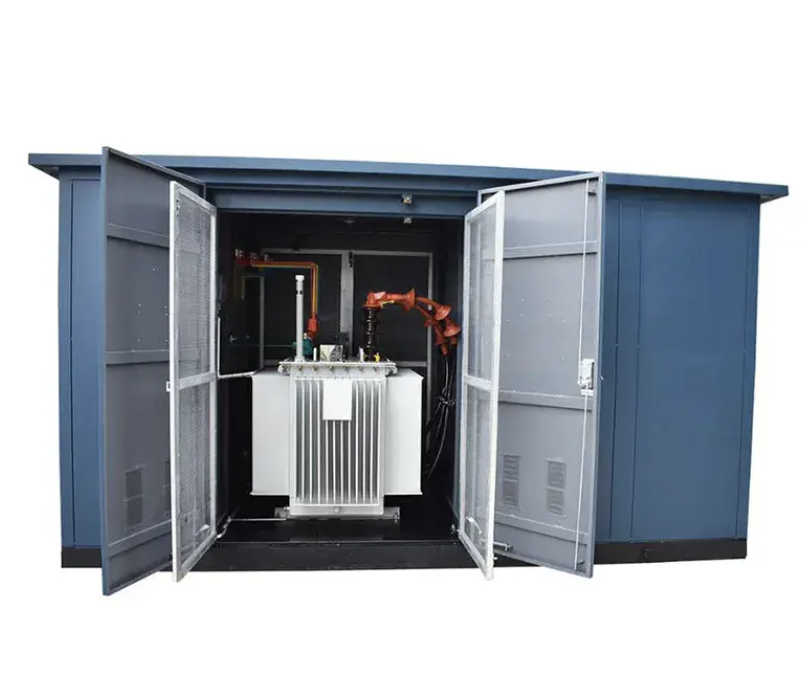
This is the modern reality of the distribution transformer for substation project, a solution that has moved away from sprawling, open-air brick-and-mortar substations toward integrated, prefabricated “box” systems that blend into urban and industrial landscapes. These units are engineered to consolidate high-voltage switchgear, transformers, and low-voltage distribution panels into a single, secure housing, making them essential for modern energy grids.
The Micro-Evolution of China’s Power Infrastructure
The shift from traditional substations to compact box-type solutions did not happen overnight. Historically, during the early 2000s, power distribution in many regions relied on stationary, open-frame transformers and manual switchgear housed in large masonry buildings. These setups were not only land-intensive but also susceptible to environmental factors like dust, humidity, and wildlife, leading to frequent maintenance cycles. As urban density increased and land costs in commercial hubs began to climb, the industry sought a more efficient alternative.
The emergence of the prefabricated substation represented a turning point. Instead of building a structure on-site over several months, engineers began to favor factory-assembled units. This micro-shift allowed for “plug-and-play” installation, reducing on-site civil work by up to 70%. In China, this transition was accelerated by the massive grid modernization projects of the last two decades. Manufacturers began refining the distribution transformer to be more efficient, quieter, and smaller, eventually leading to the highly integrated “American” and “European” style box substations we see today.
Global Market Trends and the Gold Standard of KEMA
Today, the global market for packaged substations is witnessing a steady rise, driven by the need for reliable power in remote renewable energy sites and the rapid expansion of electric vehicle charging networks. Unlike the massive global shifts of the past, today’s progress is measured in incremental technical gains: better insulation materials, modular environmental protection gas-ring units, and smarter monitoring systems.
For international buyers, the challenge has always been verifying the reliability of these compact systems. This is where KEMA certification plays a vital role. Originating from the Netherlands, a KEMA Type Test Certificate is the gold standard in the electrical industry. It provides an objective, third-party verification that a distribution transformer or switchgear unit can withstand extreme short circuits, thermal stress, and mechanical wear. For a Chinese manufacturer to hold KEMA certification means their equipment is not just built to local codes, but is engineered to meet the world’s most stringent safety and performance benchmarks. It serves as a passport for high-end distribution transformer for substation project exports, ensuring that products can withstand the rigorous demands of international power grids.
Shenheng Power: A Legacy of Technical Integration
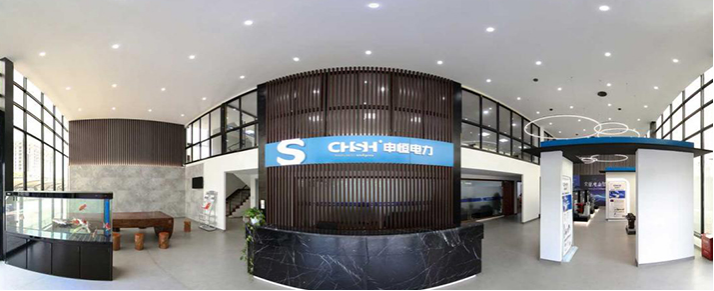
Tracing its roots back to 2001, Shenheng Power Equipment Co., Ltd (often referred to as CHSH) has grown from a specialized producer of electrical components into a premier supplier for the State Grid of China. The company’s history is one of steady, purposeful expansion. In 2012, with a significant capital injection, Shenheng focused on a wisdom-sharing model, integrating R&D with one-stop manufacturing.
By 2015, the company had introduced advanced production equipment to refine the core of its distribution transformer lineup. By 2019, they had established a dedicated professional R&D team focused specifically on complete power transmission and distribution systems. Today, the company operates out of a 15,000-square-meter facility, producing a sophisticated range of products including amorphous alloy transformers, dry-type units, and fully insulated inflatable cabinets. Their status as a professional production enterprise specializing in high and low voltage switch transmission and distribution equipment has been solidified through decades of practical application in various China-based and international projects.
Technical Innovation in the Distribution Transformer For Substation Project
The core advantage of Shenheng’s distribution transformer for substation project lies in its extreme integration and specialized design for demanding environments. Their product innovations are categorized by their specific field performance:
• Advanced Sealed Oil-Immersed Systems: Unlike ordinary units, the S11-M and S13-M series utilize a fully sealed corrugated oil tank. The elasticity of the corrugated sheets automatically adjusts for oil volume changes, eliminating the need for an oil conservator. This isolation from air prevents insulation aging and moisture ingress, significantly reducing long-term maintenance costs for any distribution transformer.
• Photovoltaic Specialized Integration: Designed for the solar sector, these containerized solutions integrate the step-up transformer, high-voltage ring main unit (RMU), and low-voltage switchgear. They feature an IP43 protection grade and can withstand temperatures from -35°C to +40°C, ensuring stable power delivery even in high-altitude or desert environments.
• Compact ZGS and YB Architecture: The American-style (ZGS) and European-style (YB) substations are engineered for space efficiency. The ZGS series occupies only 1/3 to 1/5 of the space required by traditional European substations of the same capacity, while the “dead-front” design ensures no live parts are exposed, making them safe for public access areas.
• Enhanced Fault Tolerance: These units are designed with high short-circuit resistance and lightning impulse protection (up to 75kV for HV windings). The use of high-quality copper windings and precision-wound cores results in noise levels as low as 45 dB, making them ideal for noise-sensitive residential projects where a distribution transformer must operate quietly.
Compared to traditional solutions, these box-type systems offer a fortress environment. While a traditional substation might require constant monitoring of building integrity, a Shenheng distribution transformer is housed in a corrosion-resistant shell made of stainless steel or aluminum alloy, protecting the internal components from chemical corrosion and seismic activity.
Service Excellence and Future Reliability
Beyond the hardware, the company’s service system is a pillar of its market reputation. Understanding that power failure is not an option for modern industry, Shenheng has optimized its talent resource layout to provide rapid technical support. Their “Smart Wisdom” philosophy ensures that every distribution transformer for substation project is not just a piece of iron and copper, but a part of a balanced, intelligent grid.
As we look toward the remainder of the 2020s, the focus is shifting toward environmental protection gas ring main units and solid insulated systems that move away from greenhouse gases like SF6. Shenheng is already at the forefront of this, ensuring that their distribution transformer for substation project solutions are as sustainable as they are reliable. Whether it is a shipyard in a coastal city or a data center in a high-tech zone, the goal remains the same: providing a safe, compact, and high-performance energy heart for every project through superior distribution transformer technology.
For more information on high-performance power solutions, visit: www.shenhengpower.com
Post time: Mar-03-2026